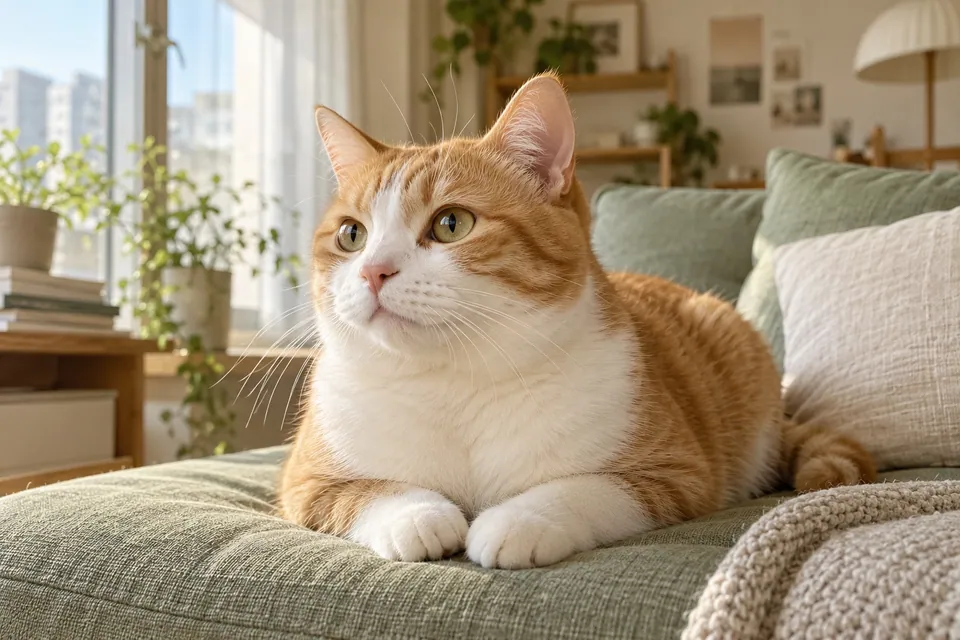
Why do cats scratch, and what should I prepare first?
In short, a cat's scratching is not a bad habit to be corrected but normal behavior, and the owner's job is not to eliminate scratching but to first provide places where scratching is allowed. The guidance from the American Society for the Prevention of Cruelty to Animals (ASPCA) explains that for cats scratching is normal behavior used to stretch, play, mark territory and shed the worn outer layer of the claws, and advises teaching the cat where to scratch rather than trying to stop it from scratching.
Cats Protection, a UK cat welfare charity, explains that scratching is behavior used to keep the claws in good condition, communicate with other cats and leave a mark for themselves, and that scent glands between the paw pads leave a mark on the scratched surface. In other words, scratch marks are not only a visible trace but also a way for the cat to leave its own scent. The 2017 declawing position statement of the American Association of Feline Practitioners (AAFP) also states that scratching is normal behavior that is both innate and learned in cats, so veterinarians should guide cat owners to help the cat scratch appropriately and to reduce unwanted damage.
So there are three things to prepare first. First, observe where the cat already scratches. Whether it is the corner of the sofa, the carpet or the door frame gives a clue as to whether a vertical or a horizontal type will suit. Second, put out several kinds of scratching posts rather than one, and let the cat choose. Third, do not scold the scratching itself. Building on these three, this article covers, in order, choosing a scratching post, protecting furniture, the organizations' positions on declawing surgery, the five pillars of indoor environmental enrichment, what owners should check, and when to seek advice.
However, this article cannot reflect every individual cat's personality and home layout. Because each cat likes different surfaces and angles, it is best to use the content below as a starting point and adjust it by watching the cat's reaction.
What kinds of scratching posts are there, and how do I choose?
Scratching posts are easier to choose if you look at them in four ways: shape, material, height and stability. The ASPCA advises offering several forms, such as flat, upright and slanted, to find the cat's taste, and gives cardboard, carpet, rope-wrapped and wood as examples of surface materials. Cats Protection explains that if there is a vertically woven surface the cat can scratch by pulling its claws downward, and that a cat that scratches horizontal surfaces such as carpet or stairs may suit a scratching pad laid flat.
Height and stability also matter. Cats Protection advises choosing one tall enough for the cat to scratch at full stretch, with a heavy, stable base so that it does not wobble or tip over when scratched. The ASPCA also says an upright type should be sturdy and tall enough for the cat to scratch with its body fully extended, and that cats can avoid one that wobbles. It cannot be said that any particular product is good; the way is to press on it yourself and check that it does not move when the cat climbs on it or leans on it.
The table sets out the features of each type and what to check. The content of the table is a general principle based on the ASPCA and Cats Protection guidance, and the form that suits can vary with the cat's age and physical condition. Cats Protection also explains that a thick, shiny plastic sheet placed over furniture is an unattractive surface for scratching, so it is also worth considering keeping the textures of the scratching post surface and the furniture surface distinct.
| Type | Cats it may suit | What to check |
|---|---|---|
| Vertical (post) | Cats that stand and scratch at full stretch | Whether the height is enough for the whole body to stretch, and whether the base is heavy enough not to wobble |
| Horizontal (flat pad) | Cats that scratch carpet or floor surfaces | Whether it is fixed so it does not slide when scratched |
| Slanted form | Cats that scratch both vertical and horizontal surfaces | Whether the angle matches the cat's taste, by watching its reaction |
| Material (cardboard, carpet, rope, wood) | Preferences differ by cat | Do not settle on one; put out several materials and compare |
Where should I place a scratching post so it gets used?
Placement matters as much as type. Cats often stretch and scratch right after sleeping and waking, so the ASPCA advises putting at least one scratching post close to where the cat naps. Cats Protection also explains placing one right next to where the cat has already been scratching and near the sleeping area, and, with several cats, putting one per cat in different places to avoid quarrels.
At first, it is easy to place it where the cat already likes to be. If the cat scratches the corner of the sofa, put a vertical type next to it. Once the cat gets used to the new spot, moving it little by little while watching the reaction is also a way. The last two sentences of this paragraph are not content confirmed directly from the organizations' guidance but this article's own suggestion, so judge by watching your cat's reaction.
When the cat shows no interest in a new scratching post, there are methods such as, as in the ASPCA guidance, moving a fishing-rod toy over the post during play or sprinkling catnip, and Cats Protection introduces rubbing catnip on the post or placing small pieces of food on it. The ASPCA also advises not throwing away a worn, loosened post right away, because cats prefer a surface that is frayed and carries their own scent. If it is worn but does not wobble and is safe, let the cat keep using it, and if it wobbles or breaks apart, it is better to replace it.
If you have several cats, spreading the scratching posts around several places in the home rather than clustering them in one place fits the quarrel prevention Cats Protection mentioned earlier. This also connects to spreading out resources, discussed in the section on environmental enrichment later.
How do I reduce furniture scratching without punishment?
The basic principle is, instead of punishing, to provide alternatives where scratching is allowed, make furniture less attractive, and reward the cat when it uses the new scratching post. The ASPCA introduces methods to make furniture surfaces unusable or less appealing, such as attaching double-sided tape, laying a vinyl carpet runner upside down (with the nubs facing up), and vinyl protectors for sofa corners. Cats Protection advises that while the cat learns the scratching post, you can temporarily cover furniture with a thick, shiny plastic sheet, and that once the cat uses the post, the post can gradually be moved to a more suitable place.
Rewarding methods appear in the same guidance. Cats Protection explains praising the cat when it uses the scratching post and, when it scratches furniture, not reacting and moving on. This is because some cats can learn that scratching certain objects gets them attention. Redirecting energy elsewhere through short, frequent play can also help, it says. On the other hand, the ASPCA says not to grab the cat's paws and force them onto the scratching post, because the cat can become frightened and come to avoid the post or the owner.
Claw care is also a means of reducing damage. The ASPCA advises trimming the claws weekly, cutting only one or two at a time and following right away with a treat or play, and introduces plastic claw caps attached with adhesive, which last about 4–6 weeks and let the cat keep scratching while reducing damage to surfaces. These caps may feel unfamiliar to a cat, so it is safer to use them after checking at an animal hospital how they are applied.
Cats Protection advises that a cat may also scratch as territory marking when it feels anxious or threatened because of another cat, that in such a case the cause of the anxiety may need to be dealt with, and that a professional behavior counselor can help. If the amount or place of scratching suddenly changes, it may be a sign of an environmental change rather than a simple habit, so please also look at the consultation criteria in the last section.
How is declawing surgery viewed? And what does Korean guidance say?
Declawing surgery is not recommended as a solution for protecting furniture, according to the overseas professional position that could be confirmed. The AAFP (American Association of Feline Practitioners) 2017 position statement says it strongly opposes performing declawing (onychectomy) as an elective procedure, and says it is not a medically necessary procedure in most cases. It explains that the surgery amputates the end bone of the toes and that risks and complications grow greater with age, and lists acute pain, infection and nerve damage, along with limping, behavior problems and chronic neuropathic pain that can occur over a long period.
The same statement says veterinarians should guide owners to alternatives, and lists as alternatives scratching posts or scratching pads, regular nail trimming, temporary synthetic claw caps, synthetic facial pheromone sprays or diffusers for stress relief, and environmental enrichment. The methods covered earlier in this article correspond to those alternatives. This statement is a revision by the AAFP of its earlier 2015 and 2007 statements.
What about Korea? The Animal Protection Act guidance page of the Animal Protection Management System (animal.go.kr), run by the Ministry of Agriculture, Food and Rural Affairs (MAFRA), lists as cruelty such acts as injuring an animal by physical or chemical means such as tools or drugs, damaging an animal's body or collecting its body fluids while it is alive, and injuring or making a companion animal ill by violating the rearing and management standards set by MAFRA, and says animal cruelty is punishable by imprisonment of up to 3 years or a fine of up to 30,000,000 won (3천만 원). However, this page had no wording that mentions surgery or declawing specifically.
So, from the materials this article checked, it cannot be stated whether declawing surgery is prohibited by law in Korea, or how far it is allowed as a veterinarian's medical practice. An owner considering the surgery should ask the animal hospital veterinarian to explain the need for the surgery, its risks and the alternatives, and if a legal judgment is needed, should check directly the text of the Animal Protection Act (동물보호법) at the National Law Information Center (law.go.kr) and with the local government concerned.
What are the five pillars of indoor environmental enrichment?
Environmental enrichment is arranging the home so that a cat living indoors can carry out its innate behavior. On its page introducing the 2013 AAFP/ISFM Environmental Needs Guidelines, the AAFP explains that the guidelines are organized around five core concepts that form the framework of a healthy cat environment and apply regardless of the cat's way of life, and that meeting a cat's needs so it can behave naturally helps prevent stress and unwanted behavior. This page does not list the five by name. The names and specific content of the five pillars are set out here based on the page on which VCA, a US animal hospital chain, introduces the AAFP and ISFM guidelines.
- First, a safe space. Provide a private place the cat can retreat to, and for many cats a high place helps. Cardboard boxes, carriers, perches and hiding holes are given as examples. It advises considering safe spaces with several entrances so that one cat is not cornered by another, and providing at least as many safe spaces as there are cats.
- Second, spreading key resources across several places. Place food, water, litter boxes, scratching posts, play and resting places apart from one another (keeping the food bowl away from the litter box), and provide each resource in at least two places.
- Third, opportunities for play and predatory behavior. Satisfy the hunting instinct with toys, play with the owner, and feeding devices that make the cat move to get its food. It says string-like toys can be swallowed, so put them away after play.
- Fourth, positive, consistent and predictable interaction with people. Many cats prefer frequent but low-pressure interaction, and it says not to force contact and to let the cat approach first.
- Fifth, an environment that respects the sense of smell. Because cats have a very sensitive sense of smell, it says to think about using strong cleaning products, and to provide surfaces, such as scratching posts, where the cat can rub its face or scratch to spread its scent. Cat pheromone diffusers and sprays are also introduced as usable for reducing anxiety, and it says to pay attention at the entrance to unfamiliar smells that come in on shoes.
It stands out that the scratching post spans both the resource-spreading and the sense-of-smell pillars. Putting scratching posts in several places in the home can fill both pillars at the same time.
How well does my home measure up? A checklist for owners
Applying the five pillars to your own home makes the gaps visible. The table below turns the guidance above into check questions, and it is not meant to give a score but to be a tool for finding where the cat is uncomfortable now. It is better to change one thing at a time and watch the cat's reaction for several days than to change everything at once.
When changing the environment, you need to respect the cat's scent and familiarity. Moving furniture around heavily or throwing out old scratching posts all at once can make the cat anxious instead, so the safe order is to place the new one next to the existing one first, confirm that it is used, and then tidy up. This order is this article's own suggestion based on the guidance above. After changing, observe whether the cat uses the new resources and whether the time it spends hiding elsewhere has increased.
| Pillar | Check question | Examples of what to adjust |
|---|---|---|
| Safe space | Is there a private space where the cat can hide from people and other cats | Prepare boxes, carriers and high places at least as many as there are cats |
| Spreading resources | Are food, water, litter box, scratching post and resting place apart from one another, with two or more of each | Separate the food bowl from the litter box and place scratching posts in several rooms |
| Play and predatory behavior | Is there an opportunity for hunting play or foraging activity | Fishing-rod play, food puzzle feeding, putting string toys away after play |
| Interaction with people | Do you let the cat approach first and have frequent low-pressure contact | Do not hold it by force, and check the signs that the cat is comfortable |
| Sense of smell | Are there scratching posts and surfaces for face-rubbing, and have strong smells been reduced | Review cleaning product use, keep scratching posts that carry the cat's scent |
What are the common misunderstandings, and when should I see a professional?
The first misunderstanding is the idea that a cat scratches furniture to annoy its owner. As seen above, scratching is normal behavior for claw maintenance, scent marking and stretching, and the ASPCA advises that forcing it can make the cat frightened and lead it to avoid the owner. The second is the idea that declawing is a simple solution. The AAFP advises that the surgery amputates the end bone of the toes and carries risks such as pain, infection, nerve damage and chronic pain, and strongly opposes it as an elective procedure.
The third misunderstanding is the idea that one big, good scratching post is enough. Each cat prefers a different angle and material, and the place matters too. The fourth is the idea that an old scratching post must be replaced right away, but the ASPCA advises that cats prefer a surface that is frayed and carries their scent. However, one that wobbles or breaks apart should be replaced. The fifth is the idea that an indoor cat does not get bored. The reason the five pillars are needed is precisely that, indoors, the owner has to create opportunities for behavior such as play, hiding and scent marking.
In the following cases it is best to consult an animal hospital or a veterinary behavior specialist.
- When the amount, place or manner of scratching suddenly changes markedly
- When a claw digs into the paw pad, or the cat seems to be in pain in its paw or claws
- When, along with scratching, hiding, changes in appetite, litter box accidents or quarrels with other cats increase
- When furniture damage does not decrease even after the scratching posts and environment have been changed enough
- When you are considering declawing surgery and want to hear the risks and alternatives first
The cause in such cases is hard for owners to sort out, and pain or illness may be hidden, so diagnosis is the veterinarian's job. If it is a behavior problem, a veterinary behavior specialist looks at the environment and the owner's responses together. Even then, methods centered on rewards and environmental adjustment, not physical punishment, are the basic approach.
Frequently asked questions
Q Is it all right to stop a cat from scratching?
Stopping the scratching itself is not recommended. The ASPCA says scratching is normal behavior used for stretching, play, territory marking and shedding the outer layer of the claws, and advises teaching the cat where to scratch rather than trying to stop it.
Q How many scratching posts do I need?
No guidance giving a set number was confirmed in this article. However, Cats Protection advises putting one scratching post per cat in different places, and the ASPCA says to put at least one close to where the cat sleeps. It is good to add more to suit the number of cats and the layout of the home, and to see whether they are used.
Q What should I do if my cat doesn't use a new scratching post?
The ASPCA advises moving a fishing-rod toy over the post during play or sprinkling catnip. Cats Protection introduces rubbing catnip on it or placing small pieces of food on it. Changing the stability, height, material and place is also a way, and you should not hold the cat and force it to scratch.
Q Is declawing surgery banned in Korea?
The Animal Protection Act guidance page of the Animal Protection Management System (animal.go.kr) that this article checked had no wording that mentions declawing specifically. Because whether it is prohibited cannot be stated, if needed you should look at the text of the Animal Protection Act (동물보호법) at the National Law Information Center, or check with the local government and an animal hospital veterinarian.
Q Are claw caps or claw trimming safe?
The ASPCA introduces trimming the claws weekly, cutting only one or two at a time and following right away with a treat or play, and plastic claw caps attached with adhesive that last 4–6 weeks. The AAFP also lists regular nail trimming and temporary synthetic claw caps as alternatives. If it is your first time, it is best to learn the method at an animal hospital and to stop if the cat finds it hard.
Q Can I do environmental enrichment in a small home?
No standard requiring a large space was in the materials this article checked. The five pillars VCA introduced, such as hiding places like boxes or carriers, resources set apart from one another, play, low-pressure contact and consideration for smell, are items that can be checked even in a home that is not large.
Q What changes in a multi-cat household?
According to VCA's introduction, provide at least as many safe spaces as there are cats, and consider places with several entrances so that one cat is not cornered by another. As Cats Protection advises, putting one scratching post per cat in different places also helps reduce quarrels.
Limits and scope of this guide
This article is general information and is not a diagnosis or prescription. The text of the current American Veterinary Medical Association (AVMA) declawing policy could not be opened and so is not covered in the body, and the text (articles) of Korea's Animal Protection Act could not be checked directly, so the legal scope of declawing surgery in Korea is not stated definitively. The details of the five pillars rely on the VCA introduction page rather than the text of the 2013 guidelines, and specific height figures and numbers of scratching posts were not confirmed in the sources. The suitable environment can differ with a cat's age, joint condition and illnesses, so if there is a change that worries you, consult an animal hospital.
Translated from the Korean edition · Editorial draft, not professionally reviewed. The Korean edition is an explainer newly written from public sources; it is not a full translation of those sources. Veterinary expert review has not been completed. For decisions about your pet's health, talk to a veterinarian who knows your pet.
Sources and check dates
- Guidance on prohibited acts of animal cruelty and penalties under the Animal Protection Act (동물보호법 동물학대 금지 행위와 처벌 안내) ↗
Used as the basis for checking the guidance on prohibited acts of animal cruelty and penalties in Korea, and for confirming that this page has no wording that deals specifically with declawing.
- 2017 Declawing (AAFP declawing position statement) (AAFP 발톱 제거 입장문) ↗
Used as the basis for the position strongly opposing declawing as an elective procedure, the risks, and the list of alternatives. The current page writes the organization's name as FelineVMA (the new name of the AAFP).
- 2013 AAFP/ISFM Environmental Needs Guidelines ↗
Used as the basis for the explanation that the environmental needs guidelines are built on five core concepts and help prevent stress and unwanted behavior.
- Feline Environmental Needs Guidelines ↗
Used as the basis for introducing the names and details of the five pillars of the AAFP and ISFM guidelines (safe space, spreading resources, play, interaction, smell).
- Scratching Behavior in Cats ↗
Used as the basis for the reasons for scratching, types and placement of scratching posts, furniture protection, claw trimming and caps, and the advice not to force the cat.
- Scratching (cat scratching) (고양이 스크래칭) ↗
Used as the basis for the height and stability of scratching posts, vertical and horizontal preferences, placement, responses to furniture scratching, and scratching caused by anxiety.
Korean edition checked · translated · each source may have a different check date. No paid partnerships.
This guide relies on 1 Korean law or notice. Current effective dates and upcoming amendments are listed on Korean law check status. This is not legal advice.