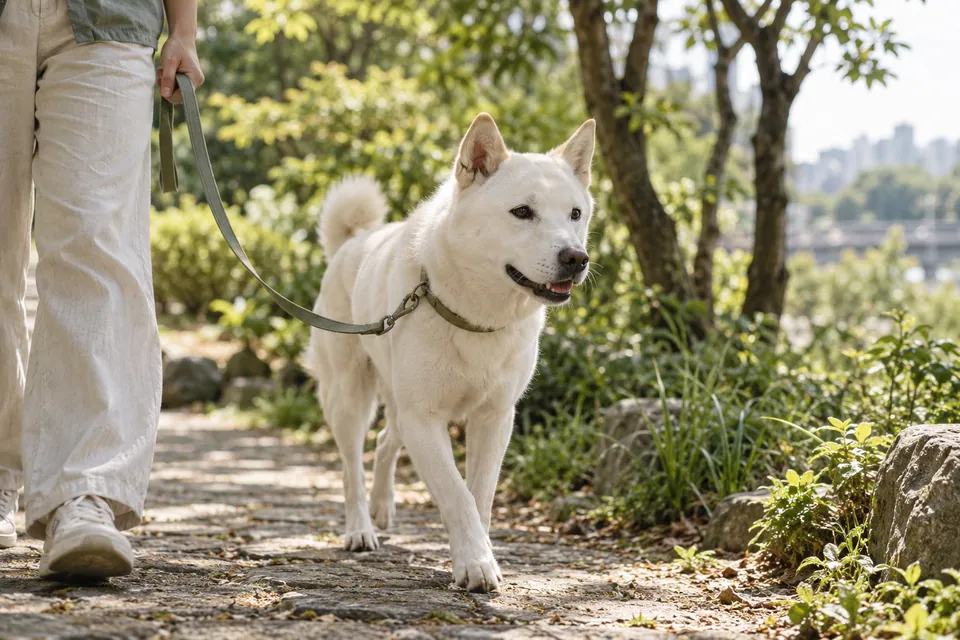
What are the core principles of house training?
The core principles of puppy house training can be summarized as three. First, create many chances to go in a set place. Second, reward right after success in that place. Third, do not scold mistakes; clean them up quietly and leave no smell. The American Society for the Prevention of Cruelty to Animals (ASPCA), the Australian branch of the Royal Society for the Prevention of Cruelty to Animals (RSPCA Australia) and the US veterinary hospital network VCA all advise a reward-based approach in this direction.
Here is why this method is used. At first a puppy does not know where the toilet is. For people to show the place they want, the experience of going in that place has to be linked with a good result (a treat, praise, play). So RSPCA Australia's guidance explains that you should reward outside within a second or two of toileting, before coming back inside. If the reward is late, it is hard for the puppy to connect it to what it was for.
Also, a young puppy's bladder and control over elimination have not yet fully developed. RSPCA Australia advises that very young puppies cannot fully control urination, so accidents are to be expected. So it is better to see accidents as a matter of developmental stage and managing the environment, not of character or stubbornness.
This article explains principles and order. Speed varies greatly with an individual puppy's age in months, breed and health, so please do not read it as meaning training must be finished within a set period.
When should you take the puppy to the toilet spot?
Giving many chances specifically means taking the puppy to the toilet spot at set times. ASPCA advises taking a newly arrived dog every 2–3 hours, and more often if it is very active indoors or has frequent accidents, and also right after meals, right after waking and right after drinking water. VCA also gives a schedule of taking the puppy right after waking, after meals or after drinking a lot of water, every 30 minutes during active play, every 1–2 hours while awake, and every 4 hours even when resting. The same explanation says young puppies should be taken once during the night as well until around 5 months of age.
Reading body language is also important. VCA gives as toileting signals stopping an activity and quickly squatting, sniffing the floor and circling, and restlessness. RSPCA Australia also explains that sniffing the floor or circling are signals. When such body language appears, taking the puppy to the toilet spot immediately is the advised method.
There is also guidance on how to proceed outside. VCA explains waiting outside for about 5 minutes and, if nothing happens, coming back in and watching closely. ASPCA advises spending at least 5 minutes outside and, if the puppy does not go, keeping it in a small space for 15 minutes before trying again. VCA advises putting off playtime until after toileting, and ASPCA advises taking a walk after the puppy goes outside. If a walk or play is given after toileting as an additional reward, the order becomes clear: toileting first, enjoyable activity next.
It helps to arrange the schedule in a table that is easy for owners to use. The table below combines the guidance above, and because the intervals differ by organization, it is for reference, to be adjusted while watching your own puppy's actual response.
| When | Guidance | Source |
|---|---|---|
| Right after waking | Take it right away after naps and as the first thing in the morning | VCA, ASPCA, RSPCA Australia |
| After meals or drinking | Take it right after it eats or drinks a lot | VCA, ASPCA |
| During active play | Check every 30 minutes during play | VCA |
| While awake | Check every 1–2 hours (VCA); every 2–3 hours for a newly arrived dog (ASPCA) | VCA, ASPCA |
| When toileting signals appear | Move right away if sniffing, circling or stopping an activity is seen | VCA, RSPCA Australia |
How do you reward success?
Give the reward at the very spot and the very moment the puppy finishes toileting. ASPCA advises giving a small treat piece about the size of a pea when the puppy toilets in the right place, and says to give plenty of treats when training first begins. VCA says to give praise and a small treat right after toileting, outside near the spot where it went and not after coming back inside, and explains that play should be put off until later. For the kind of treat, you can choose one that suits the puppy's body, and this article does not recommend any specific product.
You can add a cue word to this. RSPCA Australia and VCA explain that if you repeat a consistent word (for example a short single word) while the puppy toilets and reward it afterward, a connection can form over time so that the puppy toilets on that word. Settling on one word and having the whole family use the same word reduces confusion.
There is also a stage where the puppy starts to express its wish to toilet. VCA introduces methods where the puppy comes to the owner and barks, scratches at the door, or rings a bell hung on the door to signal.
One easily misunderstood point is that rewards are not needed forever; they are a tool for the stage of building the toileting habit. RSPCA Australia advises that even after training is finished, you should occasionally reward correct toileting to maintain the habit.
What should you do when the puppy has an accident?
When there is an accident, cleaning up without scolding is the advised principle. RSPCA Australia explains that scolding or putting the nose to the excrement teaches nothing, harms the animal's welfare and its relationship with the owner, and can lead to avoiding toileting in front of the owner. VCA also advises not rubbing the nose in it or hitting, and ASPCA explains that punishment can make a dog afraid to toilet in front of the owner.
If you see the puppy in the very moment of the accident, ASPCA advises interrupting the behavior with a clap or a short sound in a calm voice, taking it outside right away, and praising it and giving a treat if it toilets outside. VCA explains distracting the puppy without frightening it, then quickly guiding it to the right place and praising it. If you find the accident after it has already happened, ASPCA explains that a dog cannot connect a punishment given later with the accident and says not to punish but to clean it up with an enzyme-based cleaner. VCA also advises not punishing, calmly cleaning up, and resolving to watch more closely from now on.
Removing the smell is also important. VCA explains that leftover urine or stool smell can encourage the puppy to toilet in the same spot again, and advises using an enzyme-breakdown cleaner. ASPCA also advises an enzyme-based cleaner. RSPCA Australia says to use a cleaner without ammonia. The reason is interpreted as being that urine also has an ammonia smell, so an ammonia-based cleaner can feel to the puppy like a signal that the spot is a toilet, but this explanation is not written directly in the organization's guidance, so please treat it as reference only.
Frequent accidents are generally advised to be a sign of too little supervision and too few chances, not that the puppy did something wrong. VCA explains calmly cleaning up after an accident and increasing supervision.
How do you use a kennel and a pen?
In house training, a kennel (carrier, crate) and a pen are advised as management tools to reduce accidents. If the puppy has accidents all around the house while the owner cannot watch, practice builds up in the wrong places. ASPCA advises keeping the puppy where the owner can see it, or keeping it in the same room using doors and safety gates. VCA explains tethering the puppy by a leash, watching it directly within about 3 meters (10 feet), or keeping it in a safe area.
A kennel has a time limit. VCA advises that a kennel can be used for up to about 3 hours for short absences, and ASPCA advises using it for within about 4 hours for an adult dog. If you must be away longer, ASPCA says that when away for more than 4 hours you should use an exercise pen for small dogs, or a room blocked with a safety gate for medium and large dogs, and VCA gives methods such as a large kennel divided into a resting spot and a pad area, or placing pads or artificial turf in an exercise pen area.
There is also guidance to keep the kennel in the bedroom at night (ASPCA). VCA explains that a young puppy may need to go out once during the night until around 5 months of age.
There are points to be careful about. A kennel is not a place for punishment, and one that is too small and uncomfortable, or confinement that is too long, becomes a problem instead. If the puppy barks anxiously inside or is overly distressed, you may need to slow down the process of getting used to the kennel or consult a veterinarian or a veterinary behavior specialist. This article does not cover the detailed steps of kennel acclimation training.
There is also guidance on the speed of increasing free time. VCA explains considering increasing freedom little by little after 8–12 weeks without accidents. The approach is to widen the area one room at a time rather than opening the whole house at once.
In a Korean apartment, should you choose pads or outdoor toileting?
There is no single set answer. Overseas organizations advise that indoor toileting supplies (pads, artificial turf, dog toilets) can also be used depending on the situation. ASPCA explains placing a toileting spot such as pads, artificial turf or a dog-only toilet inside the confined area. RSPCA Australia advises that pads are useful when the owner cannot watch or is away from home, and that you should gradually remove them once the puppy learns bladder control and toilets on cue. VCA explains that even when using an indoor method, you should take the puppy to that spot at toileting times.
In a Korean apartment setting, many owners start with indoor pads at first because of circumstances such as waiting for the elevator, the floor number, weather, and restrictions on going out before vaccinations are finished. This is an explanation of ordinary living circumstances, not evidence that a specific method is better. However, a puppy used to pads may find it hard to go outside because the floor material is different, so it helps to decide in advance which method is the final goal and proceed consistently in one direction.
If you aim for outdoor toileting, as VCA's guidance says, the basic approach is to take the puppy out through the same door and head to the toileting spot. How to handle going out before vaccination depends on the individual situation, so please check with an animal hospital.
There is also a way to combine the two. For example, using pads during time alone in the daytime and taking the puppy outside when the owner is there. In this case, so that the puppy is not confused about where it may go, it is good to fix the pad in one place and consistently teach the places where you take the puppy when signals appear.
| Type | Known advantages | Points of caution |
|---|---|---|
| Indoor pads / artificial turf | Can be used when away from home or when watching is difficult (RSPCA Australia, ASPCA) | A step of removing them later is needed. The puppy may hesitate outside because the floor material is different |
| Outdoor toileting | Once the habit of going outside settles, indoor supplies do not need to be managed separately | Many trips out, and the environment (vaccination timing, weather, elevator and so on) has a large effect |
| Using both | Can be run flexibly depending on the time of day | If the division of places is vague, confusion can arise, so a consistent rule is needed |
If accidents continue, should you check for a medical cause first?
If accidents continue despite hard training, or a dog that used to go in the right place suddenly starts having accidents, the advised direction is not to see it only as a training problem. VCA explains that if a dog that was already house trained starts having accidents indoors again, you should always consult a veterinarian. PetMD advises a veterinary checkup if accidents continue even though you take the dog out consistently, or if the appearance or smell of the urine changes. WebMD explains that if a dog that was already house trained urinates more often, veterinary care is needed, and lists as signs of a urinary tract infection bloody or cloudy urine, pain or straining when urinating, drinking more water than usual, and frequent urination.
Examples given as medical causes include urinary tract infection, bladder and urinary stones, diabetes, Cushing's disease and urinary incontinence (WebMD, PetMD), and WebMD adds kidney disease. WebMD lists reduced appetite and lethargy as signs of stones, and vomiting, diarrhea, reduced appetite and so on as signs of kidney disease. PetMD mentions urine tests, blood tests and imaging tests (X-ray, ultrasound). Which tests to do is for the veterinarian to decide, and this article does not diagnose or give treatment methods.
There is information that is good for owners to put together before going to the hospital: the date the accidents began, how many times a day, whether it is urine or stool, whether the amount is large or small, whether the color or smell has changed, and whether there are changes in water intake and appetite. Keeping photos or short notes on a mobile phone helps the veterinarian understand the situation.
PetMD advises that if the problem continues after medical causes have been ruled out, you can get help from a veterinary behavior specialist.
How do you tell it apart from marking or excitement urination?
Not every urine accident is a house training problem. There are several cases that need to be told apart.
- Territory marking: behavior of marking territory with urine. PetMD advises it is more common in young unneutered males and can be triggered by changes in the home.
- Excitement urination: urine coming out when the dog is very happy or excited; PetMD explains it is more common in young puppies but can also occur in adult dogs. VCA advises that some puppies urinate when excited or anxious, as when greeting people, that this is not because house training has become lax, and that a behavior specialist can help.
- Submissive urination: PetMD introduces it as a common problem in adult dogs.
- Accidents related to separation anxiety: if accidents occur only when the owner is absent and other anxious behaviors come with them, the possibility of separation anxiety should be considered. This part is explained separately in the article on separation anxiety.
The way to tell them apart is to observe when, where and in what situation the urine comes out. This is only an observation tip, not a diagnosis, and since a urinary problem can overlap in any case, it is safer to check with a veterinarian if it persists.
What guidance is there on excrement in Korea?
In Korea, cleaning up excrement when going out with a pet is presented as an owner's duty. The Geumcheon-gu Office guidance page explains that when going out with a pet, you must carry a waste bag and collect excrement immediately when it occurs, and advises that urine in shared spaces inside a multi-unit housing building (stairs, elevators and so on) or on benches and chairs where people lie or sit must also be wiped up immediately. Easy-to-Find Life Law Information (찾기쉬운 생활법령정보) presents this duty as based on Article 16, paragraph 2, item 3 of the Animal Protection Act (동물보호법), and advises that violation carries a fine of up to KRW 500,000 (as of the drafting date, October 15, 2026). The reason for amendment (January 20, 2015, Act No. 13023) of the Animal Protection Act (동물보호법) posted on the National Law Information Center (law.go.kr) also contains an improvement so that pet urine is handled in shared spaces inside buildings such as stairs, and the purpose is stated to be reducing discomfort between neighbors in multi-unit housing.
However, this article could not directly open and check the current provision screen on the National Law Information Center. The article number and fine above follow the Easy-to-Find Life Law Information guidance, so owners are advised to check the current content of the Animal Protection Act (동물보호법) directly on the National Law Information Center. Laws can be amended.
What owners actually need to prepare when teaching outdoor toileting is simple. Always take waste bags with you, clean up immediately when the puppy toilets, and bring wet wipes or a water bottle so you can wipe up right away if the puppy urinates in a shared space such as an elevator or stairs. The Geumcheon-gu Office guidance also explains that when going out you should wear an ID tag with name, contact number and registration number, and use a leash or chest leash within 2 meters. This guidance is a general rule for going out and is of little direct relevance to house training, but it is an item worth checking together at the time you start outdoor training.
There are also differences from overseas guidance. Overseas organization materials mainly focus on training techniques, while Korean materials focus on the owner's duties in public places. This article is an attempt to explain the two in connection, and ordinances and guidance may differ by region.
What are common misconceptions, and when should you go to a professional?
Here are common misconceptions in house training.
- Putting the nose in it makes the puppy understand: organization guidance explains that this method teaches nothing (RSPCA Australia, VCA).
- A few rewards and you are done: there is guidance to occasionally reward correct toileting to maintain it even after training is done (RSPCA Australia).
- An accident is defiance: there is an explanation that a young puppy's control is not yet fully developed (RSPCA Australia).
- Using pads means outdoor toileting won't work: according to the guidance, pads are a management tool and can be transitioned away gradually later (RSPCA Australia). However, whether the transition is easy depends on the individual dog and environment.
- Once trained, there will never be accidents: if a dog that was already house trained starts having accidents again, checking for a medical cause is advised (VCA).
Here are also the signs that tell you to consult a professional.
- When a dog that was usually reliable suddenly starts having accidents, have it checked at an animal hospital.
- If the appearance or smell of the urine changes, it looks bloody or cloudy, the dog seems to be in pain when urinating, or urination becomes more frequent, go to an animal hospital (PetMD, WebMD).
- WebMD lists drinking more water than usual, lethargy, reduced appetite, and vomiting and diarrhea as signs of medical causes such as urinary and kidney problems, so if such changes are seen together, get veterinary care.
- If accidents continue even without a medical problem, you can get help from a veterinary behavior specialist (PetMD). VCA advises that a behavior specialist can help with excitement urination.
Punishment-centered methods are not recommended. The reason major organizations advise reward-based methods is that they explain punishment can make a puppy afraid of or avoid toileting in front of the owner (ASPCA, RSPCA Australia).
Frequently asked questions
Q How many weeks does house training take?
There is no set period. None of the materials checked this time gave guidance guaranteeing a fixed period, and it varies with the puppy's age in months and environment. VCA advises considering increasing free time little by little after 8–12 weeks without accidents. This is a reference criterion for widening the stage, not a completion point.
Q Why shouldn't I scold when there is an accident?
RSPCA Australia explains that scolding or putting the nose in it teaches nothing, harms the puppy's welfare and its relationship with the owner, and can make it avoid toileting in front of the owner. ASPCA and VCA advise not to punish and to clean up if you find the accident after it happened.
Q What cleaner should I use to remove the smell?
VCA and ASPCA advise enzyme-based cleaners, and RSPCA Australia advises a cleaner without ammonia. This does not recommend any specific product, and you should follow the usage and safety cautions in the product instructions. VCA explains that if a smell remains, the puppy tends to toilet in the same spot again.
Q How many hours can I leave a puppy in a kennel?
It differs by organization. VCA advises up to about 3 hours for short absences, and ASPCA within about 4 hours for an adult dog. ASPCA advises that when away for more than 4 hours you use an exercise pen or a room blocked with a safety gate, or, if longer, hire a dog walker.
Q What should I do if a puppy that was doing well suddenly has an accident?
The advised direction is not to scold and to check at an animal hospital first. VCA explains that if a dog that was already house trained starts having accidents again, you should always consult a veterinarian, and WebMD and PetMD list medical causes such as urinary tract infection, stones and diabetes. It helps to bring a record of when it started, how many times, and the condition of the urine.
Q Is leaking urine when happy also a training problem?
It may not be a regression in training. VCA explains that some puppies urinate when excited or anxious, as when greeting people, that this is not because house training has become lax, and advises that a behavior specialist can help. If it persists, consult a veterinarian or a veterinary behavior specialist.
Q Must I clean up excrement when toileting outdoors?
The Geumcheon-gu Office and Easy-to-Find Life Law Information (찾기쉬운 생활법령정보) explain that when going out you must carry a waste bag and collect excrement immediately when it occurs. Life Law Information advises that this is a duty under Article 16 (Management of Animals Subject to Registration (등록대상동물의 관리 등)), paragraph 2, item 3 of the Animal Protection Act (동물보호법) and that violation carries a fine of up to KRW 500,000. Please check the current law directly on the National Law Information Center.
Limits and scope of this guide
This article summarizes general house training principles and does not replace diagnosis or treatment of an individual puppy. It centers on overseas organization materials, so the explanation of the Korean apartment setting is about general living circumstances and has no separate supporting material. The articles and fines of the Animal Protection Act (동물보호법) follow the Easy-to-Find Life Law Information (찾기쉬운 생활법령정보) guidance, and the current provision screen on the National Law Information Center could not be checked directly, so please check it there. If there are sudden accidents, urine abnormalities or lethargy, go to an animal hospital.
Translated from the Korean edition · Editorial draft, not professionally reviewed. The Korean edition is an explainer newly written from public sources; it is not a full translation of those sources. Veterinary expert review has not been completed. For decisions about your pet's health, talk to a veterinarian who knows your pet.
Sources and check dates
- House Training Basics ↗
Used as the basis for the intervals for taking the puppy to the toilet spot, kennel time, reward methods, and enzyme-based cleaner guidance.
- House Training for Puppies and Dogs ↗
Used as the basis for the toileting schedule, toileting signals, kennel time, response to accidents, and guidance on excitement urination and medical causes.
- How can I toilet train my puppy or adult dog? ↗
Used as the basis for reward timing, opposition to punishment, pad use, and guidance on cleaners without ammonia.
- Dog Peeing in the House: Why and How To Stop It ↗
Used as the basis for medical causes of accidents, marking behavior, excitement and submissive urination, and criteria for visiting an animal hospital.
- Medical Causes of House Soiling in Dogs ↗
Used as the basis for medical causes such as urinary tract infection, stones and diabetes, and accompanying symptoms that call for veterinary care.
- Legal obligations of pet owners (반려동물 소유자의 법적 의무사항) ↗
Used as the basis for carrying a waste bag when going out, immediate collection of excrement, and guidance on ID tags and leashes.
- Be sure to bring these when going out with your dog (반려견과 외출 시 이것만은 챙기세요.) ↗
Used as the basis for the duty to collect excrement (Article 16, paragraph 2, item 3 of the Animal Protection Act (동물보호법)) and the guidance on a fine of up to KRW 500,000.
- Reasons for enactment and amendment of the Animal Protection Act (Act No. 13023, 2015-01-20) (동물보호법 제정·개정이유(법률 제13023호, 2015-01-20)) ↗
Used as the basis for the purpose of the amendment requiring pet urine to be handled in shared spaces inside buildings as well.
- Table of contents of the Animal Protection Act (Article 15 Registration of Animals Subject to Registration · Article 16 Management of Animals Subject to Registration · Article 101 Fines for Negligence) (동물보호법 조문 목차(제15조 등록대상동물의 등록 등 · 제16조 등록대상동물의 관리 등 · 제101조 과태료)) ↗
Used as the basis for cross-checking the article numbers and article titles of the Animal Protection Act (동물보호법) used in the body (Article 16 Management of Animals Subject to Registration, Article 101 Fines for Negligence).
Korean edition checked · translated · each source may have a different check date. No paid partnerships.
This guide relies on 1 Korean law or notice. Current effective dates and upcoming amendments are listed on Korean law check status. This is not legal advice.