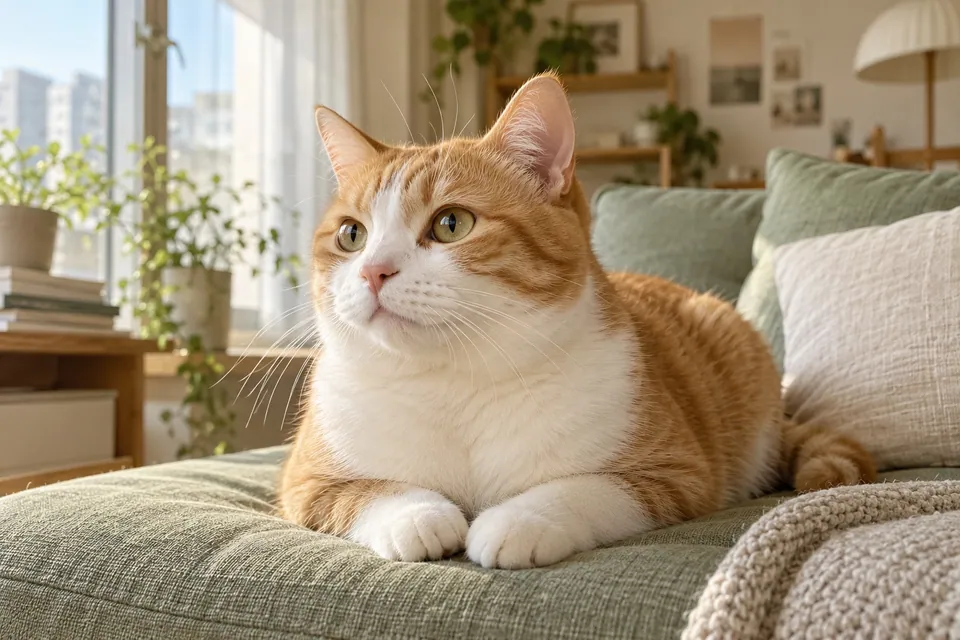
Why is a flea and tick product for dogs dangerous for cats? The short answer first
Several veterinary sources say that using a dog external parasite product that contains permethrin on a cat is very dangerous. The small animal ectoparasiticides chapter of the Merck Veterinary Manual explains that permethrin can be highly toxic to cats and can cause symptoms such as muscle tremors (fasciculations) and seizures. The plant-derived insecticides chapter of the same manual says that among pets, cats appear to be more sensitive to pyrethroid toxicity.
International Cat Care says that even a very small amount of permethrin can make a cat seriously ill, and it states that the idea that a smaller amount will be safe is not true. PDSA also explains that even a small amount of a dog product containing permethrin is likely to cause toxicity in a cat.
This article summarizes, using the sources, what permethrin is, why it is a problem for cats, how accidents happen, how urgent the signs are and how to read product labels. It does not cover how to choose or use a product, doses or home treatment. A comparison of whole ingredient classes is in the external parasite ingredients article, and the timing and product types for fleas and ticks in Korea are in the flea and tick prevention article.
What is permethrin, and what products contain it?
The Merck Veterinary Manual describes pyrethroids as synthetic derivatives of pyrethrins, insecticides obtained from chrysanthemum flowers. International Cat Care also describes permethrin as a synthetic substance similar to a natural insecticide. According to the Merck manual, pyrethroids slow the opening and closing of sodium channels, which overexcites nerve cells.
The Merck manual introduces permethrin as a fast-acting synthetic pyrethroid and writes that because it can make ticks detach before they die, it can be considered a repellent rather than a true parasiticide. It says permethrin products are labeled as repellents for ticks, mosquitoes and fleas.
PDSA explains that permethrin can be found not only in spot-ons for dogs but also in dog products such as shampoos, sprays and flea collars, and in household flea sprays and powders. The Merck manual notes that one dinotefuran product approved for dogs contains both pyriproxyfen and permethrin. With combination products, you have to read the ingredient list rather than the product name to know whether permethrin is in it.
The Merck manual writes that cats tolerate synthetic pyrethroids less well, while natural pyrethrins have relatively low toxicity in dogs and cats. Even though the names are similar, natural and synthetic ingredients cannot be lumped together as the same risk, so this article deals with synthetic pyrethroids such as permethrin.
Why are cats especially sensitive to permethrin?
Because the sources explain different parts of the question, each one is introduced separately.
- International Cat Care: a cat's liver cannot break permethrin down into a harmless form, so it builds up in the body.
- AAFP post: glucuronide conjugation in the cat's liver is insufficient for permethrin, so high concentrations result. The same source writes that dog products typically contain 45 to 60 percent permethrin, while cat-labeled products contain less than 0.1 percent.
- PDSA: cats lack the protein needed to break permethrin down, so it builds up in the body and causes toxicity.
- Merck Veterinary Manual: says only that cats appear more sensitive, and does not give the reason.
The wording of the 3 sources differs, but they agree in direction: a cat's ability to clear this ingredient from the body is limited. This article does not give any biochemical explanation beyond that.
There are two practical implications for owners. A product being used on dogs does not mean it is safe for cats, and calculating a reduced amount by body weight does not solve the problem. This is why International Cat Care states directly that a reduced amount is not safe either.
How do accidents happen?
The first route is applying a dog product directly to a cat. PDSA presents this as the most common cause, and International Cat Care describes cases where a dog spot-on is used on a cat because the owner assumes a small amount will be safe. The AAFP post writes that labels on dog flea products may not clearly convey the risk to cats, and that they are often bought from places other than veterinary clinics, where owners get less counseling.
The second route is contact with a dog that has been treated. International Cat Care explains that if a cat rubs against a dog treated with permethrin or shares its furniture, the permethrin can transfer to the cat's coat. PDSA cites grooming and sharing bedding, and the AAFP post cites exposure from grooming a dog that was recently treated.
In addition, PDSA also cites dog shampoos, sprays and collars, and household flea sprays and powders, as causes of exposure. For household permethrin sprays, PDSA describes as safe a method in which the cat is not sprayed directly, all animals are removed, the room is left empty for 30 minutes after spraying and then ventilated for at least 1 hour before the animals return. This is guidance from a UK source, so for products in Korea the product's own instructions take priority.
For homes with both dogs and cats, International Cat Care and PDSA say to keep the cat away from the dog for 72 hours if a permethrin product has been used on the dog. This figure is guidance from UK organizations and may differ by product, so the actual period should follow the product instructions and the veterinarian's advice. International Cat Care says there is no evidence that cats have been poisoned by clothing treated with permethrin, and advises contacting the manufacturer if you are concerned.
What signs are known, and how urgent are they?
The signs listed by the various sources are given below, separated by source.
- International Cat Care: tremors, shaking, twitching, sensitivity to touch or sound, wobbliness and poor coordination, and seizures in severe cases. Less commonly it also lists difficulty breathing and blindness.
- PDSA: drooling, wobbling and losing balance, wide pupils, twitching and tremoring, seizures, and difficulty breathing.
- AAFP: restlessness, excess salivation, muscle spasms, seizures and death.
- Merck Veterinary Manual (pyrethroids in general): salivation, vomiting, hyperexcitability, tremors, seizures, difficulty breathing, weakness, prostration and death.
PDSA says permethrin is absorbed quickly and signs usually appear within a few hours, but can take up to 36 hours. So a cat looking normal right after exposure is no reason to feel safe. PDSA writes that permethrin first makes the nervous system overly sensitive and can then lead to paralysis, and that left untreated it is usually fatal.
On urgency, International Cat Care says to contact the veterinary team immediately, and PDSA says to contact a veterinarian immediately if exposure is suspected or signs appear. This article passes that on as it is. If exposure is suspected, contact an animal hospital immediately and do not wait for signs to appear. The AAFP post writes that prompt treatment of such cases is necessary for the cat's survival. International Cat Care explains that cats treated early usually recover fully, but cats with seizures that are hard to control have a poor outlook.
How is it handled at the hospital? Can I wash the cat at home?
This section is not meant to give treatment instructions. It introduces what the sources wrote and explains why owners should not decide on their own at home.
The Merck Veterinary Manual explains that there is no specific antidote for pyrethroid poisoning and that treatment is supportive. For skin exposure it describes washing with a mild detergent and cool water, but this is part of an explanation for veterinary professionals, and the same chapter says to first assess respiratory and cardiovascular status. Drugs for controlling seizures are also written as information for veterinarians, and this article does not copy out drugs or doses.
PDSA writes that if a cat has come into contact with permethrin, it can be washed off right away with warm water and diluted washing-up liquid if the cat allows it, while contacting a veterinarian straight away, and it explains that the cat will likely need to be admitted. It says hospital treatment may include washing off permethrin left in the coat, medication to stop seizures, medication to limit further damage and an intravenous fluid drip. This article does not present this as a treatment instruction to owners. Whether to wash and how should follow the veterinarian's advice, and this article cannot judge whether washing a cat that has tremors or seizures is appropriate.
The AAFP post also covers drugs that veterinarians give intravenously or rectally and drugs for seizure control. The single most important thing the sources ask of owners is to contact a veterinarian right away. When you call, it helps to give the product packaging or ingredient name, the time it was applied, how the cat was exposed and the signs you see now.
How should I read product labels in Korea?
In Korea, veterinary medicinal products are regulated under the Pharmaceutical Affairs Act (약사법) and the Regulation on Handling of Veterinary Medicinal Products (동물용 의약품등 취급규칙). Article 2(1)(iii) of the Regulation defines a veterinary quasi-drug (동물용의약외품) as an item designated by public notice of the head of the Animal and Plant Quarantine Agency (APQA) or the head of the National Fishery Products Quality Management Service, and item (a) includes items such as pest control agents whose action on animals is slight or indirect. Whether an external parasite product is a medicinal product or a quasi-drug has to be checked through the public notice and the approval and notification information. This article could not open the text of that notice, so it does not state which category a permethrin product is managed under.
On labeling, Article 42(2) of the Regulation requires the container or packaging and the package insert of veterinary medicinal products and quasi-drugs to state the storage method, withdrawal period, contraindications, precautions and adverse reactions set at the time of product approval, the efficacy and effects, and the product category label. Paragraph (1) of the same article requires pet veterinary medicinal products to be labeled "pet veterinary medicinal product" (애완용 동물용의약품). This article could not confirm from the provisions it read how the Regulation requires the target animal or a "do not use on cats" statement to be shown.
So when reading a "dog only" (개 전용) label, what an owner can look at is the target animal, the ingredient name and the contraindications and precautions written on the packaging and instructions. The Merck Veterinary Manual says all labels should be read carefully for ingredients, age and species restrictions and directions for use, and that because cats are sensitive to many insecticides, care is needed when using products on or near them. International Cat Care advises caution because many online products do not list active ingredients. The specific approved scope differs by product, so approval information and the instructions take priority.
| What to check | Why | Source |
|---|---|---|
| Target animal (for dogs or for cats) | Using a dog product on a cat is described as a common route of accidents | International Cat Care, PDSA |
| Ingredient name (whether it is permethrin or another pyrethroid) | With combination products the ingredients cannot be known from the product name alone | Merck Veterinary Manual |
| Age and species restrictions, contraindications and precautions | The sources advise reading labels carefully | Merck Veterinary Manual, Regulation Article 42 |
| The product used on a dog in the same home, and when | Exposure can also occur through contact with a treated dog | International Cat Care, PDSA |
| Ingredient listings that cannot be confirmed | Many online products are said not to list active ingredients | International Cat Care |
I heard cat products also contain pyrethroids. Is that true?
Yes. So saying simply that "no permethrin-class product can be used on cats" is not accurate. The content the sources wrote is introduced separately.
International Cat Care writes that permethrin is occasionally used in lower doses in flea powders and collars for cats, while saying it does not recommend flea powders and aerosol sprays, or flea collars bought from pet shops and supermarkets. PDSA writes that the UK Veterinary Medicines Directorate (VMD) classed low-dose permethrin collars for cats as safe, but that cats sensitive even to low doses should avoid these products. This article therefore does not state that permethrin products for cats are safe or dangerous, and only says to ask a veterinarian if you wonder about the ingredient and concentration.
The plant-derived insecticides chapter of the Merck Veterinary Manual describes flumethrin (a type II pyrethroid) as a spray, dip or 1 percent pour-on used against external parasites of cattle, sheep, goats, horses and dogs, and introduces it as used together with imidacloprid in flea and tick collars for cats. The same chapter writes that type II pyrethroids are more toxic than type I, and the small animal ectoparasiticides chapter writes that cats tolerate synthetic pyrethroids less well. International Cat Care and PDSA do not mention flumethrin, so their judgment on it could not be confirmed.
The Merck manual writes that amitraz, which is not a pyrethroid, should not be applied to cats in any formulation. To sum up, a product for cats being in the same ingredient class does not make it the same as a dog product, and the same class does not make all of them safe either. A veterinarian makes the judgment about a product's approved target animal, its concentration and the individual cat's health.
Common misunderstandings, and what to tell the veterinarian
Common misunderstandings the sources address are summarized below.
- "A smaller amount is fine": International Cat Care states directly that this is not safe, and PDSA explains that even a small amount of a dog product is likely to cause toxicity in a cat.
- "I did not put it on the cat directly, so it is fine": International Cat Care and PDSA say exposure can happen through contact with a treated dog or by sharing furniture or bedding.
- "There are no signs, so I can wait and see": PDSA writes that signs often appear within a few hours but can take up to 36 hours, and both organizations say to contact a veterinarian immediately if exposure is suspected.
- "It is safe for dogs, so it is safe for cats": the Merck manual explains that cats are more sensitive to this ingredient, and International Cat Care explains that something safe for dogs is not necessarily safe for cats.
The following are situations in which the sources say to contact a veterinarian immediately.
- When a dog product may have been applied to or touched a cat
- When a cat has had contact with a dog treated with a permethrin product or has stayed in the same place
- When tremors, twitching, seizures, oversensitivity, wobbliness or drooling are seen
Before calling, it helps to have the product packaging or ingredient name, the time of application, the route of exposure and the cat's age, weight and medical history. International Cat Care advises reporting suspected poisoning to the product's manufacturer and the relevant medicines regulator, and says a veterinarian can help. Where to report adverse reactions in Korea is covered in another article in this series.
Frequently asked questions
Q Is it all right to put just a tiny amount of a dog flea product on a cat?
There is no basis to consider it all right. International Cat Care explains that the idea that a smaller amount of a dog product will be safe is not true and that even a very small amount of permethrin can make a cat seriously ill. PDSA also says even a small amount of a dog product is likely to cause toxicity in a cat. Which product suits a cat should be discussed with a veterinarian.
Q I did not apply anything to my cat. Can a dog living in the same home still put the cat at risk?
International Cat Care and PDSA say it can. They explain that permethrin can transfer to the cat's coat, or exposure can happen through grooming or sharing bedding. The two organizations say to keep the cat away from the dog for 72 hours after a permethrin product is used on the dog, but this is guidance from UK sources, so the actual period should follow the product instructions and the veterinarian's advice.
Q What should I do if I think my cat has touched permethrin?
International Cat Care and PDSA say to contact a veterinarian immediately. This article does not give home detoxification or washing methods. The part where PDSA mentions washing is written together with contacting a veterinarian straight away, and actual treatment should follow the veterinarian's advice. Giving the product packaging, ingredients, the time it was applied and the signs you see helps the consultation.
Q What signs appear when a cat is poisoned by permethrin?
The sources list tremors, twitching, muscle spasms, sensitivity to sound or touch, wobbliness, drooling, wide pupils, seizures and difficulty breathing. PDSA says signs usually appear within a few hours but can take up to 36 hours. If signs are seen or exposure is suspected, contact a veterinarian immediately.
Q Can flea collars or powders for cats also contain permethrin?
International Cat Care says permethrin is occasionally used in lower doses in flea powders and collars for cats, and PDSA writes that the UK regulator classed low-dose permethrin collars for cats as safe but that sensitive cats should avoid them. This article does not judge which product is safe, so if you wonder about the ingredient and concentration, ask a veterinarian.
Q Are other pyrethroids such as flumethrin all right for cats?
It cannot be stated from the sources read for this article. The Merck Veterinary Manual explains that a flumethrin and imidacloprid combination collar is used against fleas and ticks in cats, while also writing that cats tolerate synthetic pyrethroids less well. International Cat Care and PDSA did not mention flumethrin. Safety by product should be checked with a veterinarian.
Limits and scope of this guide
This article is an editorial draft, and professional review by a veterinarian or pharmacist has not been completed. It was compiled from the International Cat Care and PDSA pages, two chapters of the Merck Veterinary Manual and the AAFP post, which were opened and read. The reason for cats' sensitivity is not stated definitively because the sources word it differently, and a rise in body temperature could not be confirmed in the sources read. Whether permethrin products in Korea are managed as medicinal products or quasi-drugs, and whether "dog only" or "do not use on cats" labeling is mandatory, are not stated because the text of the notice and the approval information could not be confirmed. The sources are overseas (mainly UK and US), so figures such as 72 hours and product classifications may not fit products in Korea as they are. Do not use this article to judge a cat that may have been exposed; contact a veterinarian immediately.
Translated from the Korean edition · Editorial draft, not professionally reviewed. The Korean edition is an explainer newly written from public sources; it is not a full translation of those sources. Veterinary expert review has not been completed. For decisions about your pet's health, talk to a veterinarian who knows your pet.
Sources and check dates
- Permethrin poisoning ↗
Used as the basis for the limit of the cat's liver in breaking permethrin down, misuse of dog spot-ons and the route through contact with a treated dog, signs, the advice to contact a veterinarian immediately, 72-hour separation, and cautions about low-dose cat products and online products.
- Permethrin toxicity in cats ↗
Used as the basis for the lack of a protein to break permethrin down, exposure routes (dog products, grooming, bedding, household sprays), signs and the onset time of up to 36 hours, the advice to contact a veterinarian immediately, the mention of washing, and guidance on low-dose cat collars.
- Pyrethrins and Pyrethroids ↗
Used as the basis for cats' greater sensitivity, the action on sodium channels, signs in general, the explanation that there is no specific antidote, and the mention of flumethrin and imidacloprid collars for cats.
- Ectoparasiticides Used in Small Animals ↗
Used as the basis for permethrin's toxicity to cats and muscle tremors and seizures, its repellent character, the advice to read labels carefully, and the explanation that amitraz should not be used on cats.
- Permethrin Poisoning and Cats ↗
Used as the basis for insufficient glucuronide conjugation in the cat's liver, the difference in permethrin content between dog and cat products, the exposure route of grooming a recently treated dog, and the need for prompt treatment.
- Regulation on Handling of Veterinary Medicinal Products (동물용 의약품등 취급규칙) (Ordinance of the Ministry of Agriculture, Food and Rural Affairs and the Ministry of Oceans and Fisheries) ↗
Used as the basis for the definition of a veterinary quasi-drug in Article 2(1)(iii) and the labeling items for containers, packaging and package inserts in Article 42 (contraindications and precautions, product category label).
- Regulation on the Scope and Designation of Veterinary Quasi-drugs (동물용의약외품의 범위 및 지정 등에 관한 규정) (APQA Public Notice No. 2025-34) ↗
Only the title, notice number and effective date (2025-12-01) of the notice that the Regulation says sets the scope of quasi-drugs were confirmed; the text and annexes could not be opened and read.
Korean edition checked · translated · each source may have a different check date. No paid partnerships.
This guide relies on 3 Korean laws or notices. Current effective dates and upcoming amendments are listed on Korean law check status. This is not legal advice.